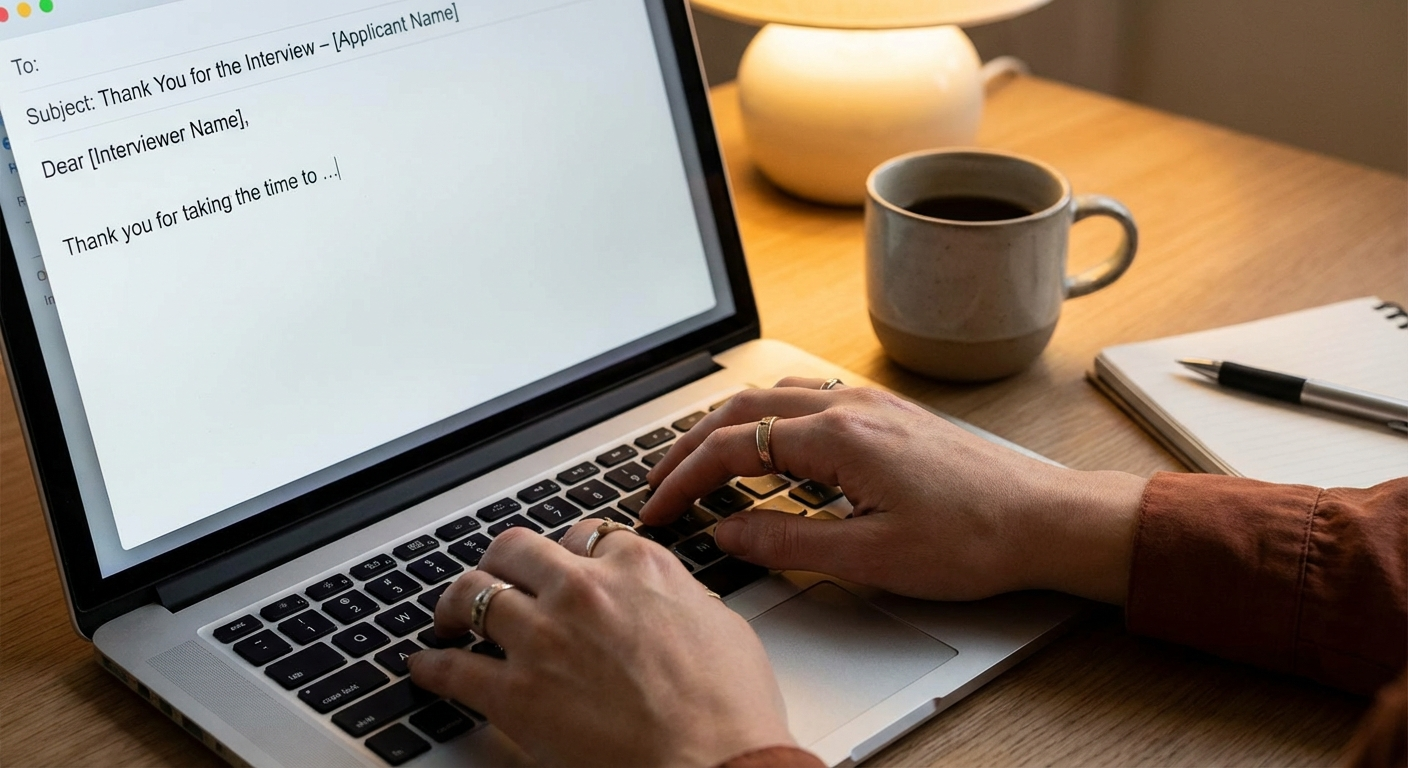
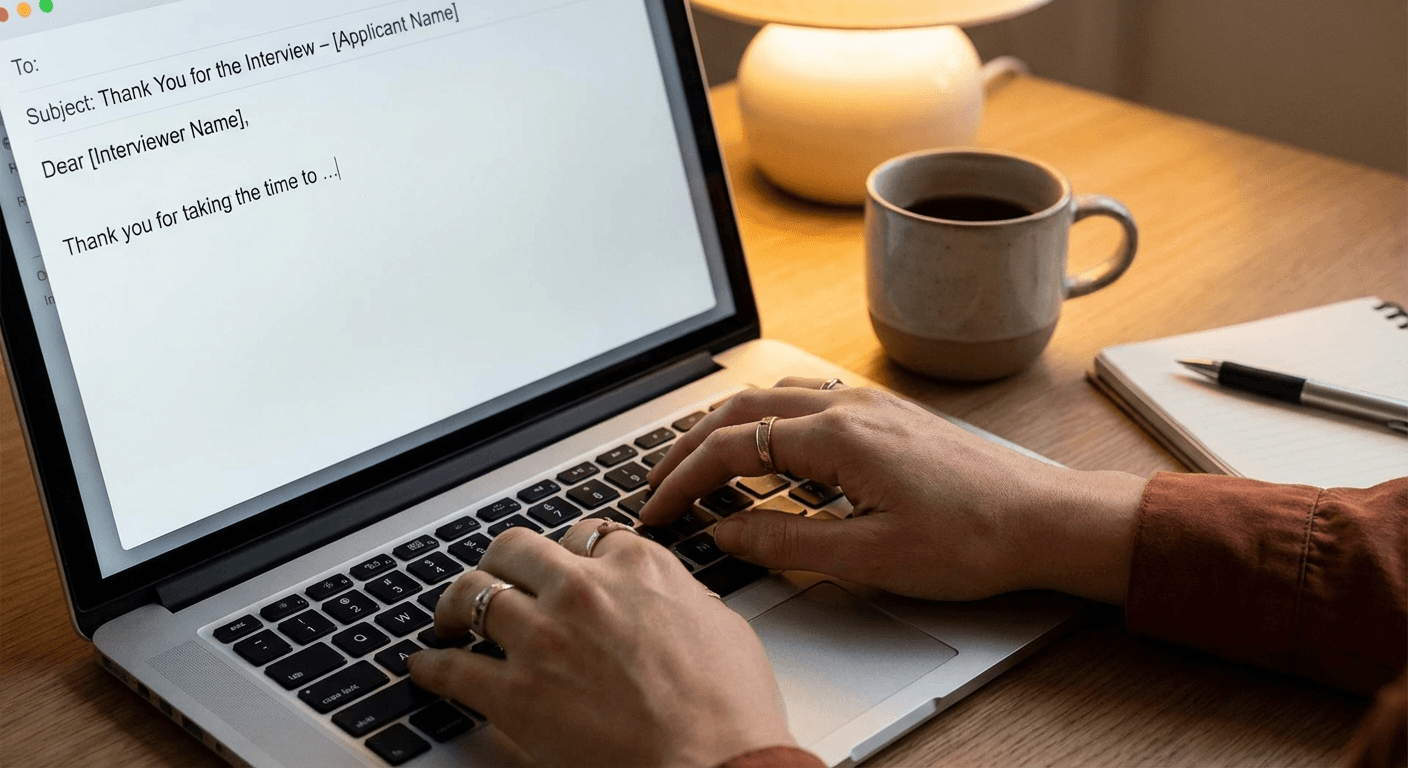
Sending a thank you email after a job interview is one of those things that sounds optional but often isn't. Not sending one can hurt you. Sending a generic one doesn't help. Sending a genuinely good one - specific, warm, and brief - actually makes a difference.
Here's how to do it right.
Why It Matters More Than You Think
Hiring managers talk to a lot of candidates, often across multiple roles at the same time. A thoughtful follow-up email puts your name back in front of them within 24 hours of the conversation. It signals professionalism and genuine interest. And if you're in a close race with another candidate, it can tip the balance.
Want to practice what you just read?
Answer a real interview question and get AI feedback in a couple of minutes.
That's not hype - it's just how memory and impressions work. The candidates who follow up feel more interested. And interest matters.
Timing: Send It Within 24 Hours
The sweet spot is same day or next morning. If your interview was in the afternoon, an email that evening is fine. If it was in the morning, send it by end of day.
Don't wait two or three days. By then, the momentum from the conversation has faded and the email loses most of its impact. The sooner the better, as long as it's not so rushed that you wrote something careless.
What to Include
A strong thank you email has three components:
Genuine thanks for their time. Simple, but it needs to be there.
A specific reference from the conversation. This is what separates a good email from a forgettable one. Don't just say "I enjoyed our conversation." Mention something specific - a problem they described, something you found interesting about their approach, a question they asked that made you think. This proves you were engaged, not just going through the motions.
A brief restatement of your interest and why. Not a pitch. Just a sentence or two about why this role is appealing and why you think you're a strong fit. Keep it short.
Optional: If you thought of something after the interview that you wish you'd said, this is a good place to add it briefly. Don't turn it into a second interview, but a short addition ("I realized I didn't mention that I've also worked with [tool/approach]...") is perfectly fine.
What to Leave Out
Keep it short. Three to five sentences is plenty. This isn't a cover letter. The interviewer doesn't need a recap of your whole background. They don't need bullet points of why you're qualified. They need warmth, specificity, and brevity.
Don't use it to ask where things stand in the process. That's a different email (the follow-up, which is covered in another article). The thank you is about expressing gratitude and interest, not collecting information.
A Template That Works
Subject: Thank you - [Your Name]
Hi [Name],
Thank you for taking the time to meet with me today. I really enjoyed our conversation, especially [specific thing - the discussion about X challenge, the way you described Y, your thoughts on Z].
The more I hear about [something specific about the role or team], the more excited I am about the opportunity. I think my background in [relevant area] would let me contribute quickly, and I'm genuinely energized by the problem you're working on.
Thanks again, and I look forward to hearing about next steps.
[Your name]
That's around 80 words. It's enough. Adjust it to sound like you.
A Real Example
Subject: Thank you - Sarah Chen
Hi Marcus,
Thanks so much for meeting with me this afternoon. I really appreciated your candor about where the product team is right now - it gave me a much clearer picture of the challenges ahead.
The conversation about your approach to cross-functional collaboration actually stuck with me. The way you described working with engineering - setting clear interfaces rather than trying to align on everything - is a model I've tried to build toward too, and I'd love the chance to apply it at this scale.
Really excited about the role. Looking forward to next steps.
Sarah
That email is specific, genuine, and short. It would stand out.
Panel Interviews: Email Each Person Separately
If you interviewed with multiple people, send each person their own email. Not the same email BCC'd to everyone - separate emails, each with a different specific reference from your time with that person.
This takes more effort, which is exactly why it stands out. It shows you paid attention to each person individually, not just to the group.
If you have all their email addresses, great. If you only have one or two, ask the recruiter or use LinkedIn to find them. It's worth the extra five minutes.
A Note on Format
Email is the right channel for most situations. LinkedIn messages are acceptable if you can't find their email and they connected with you there. Handwritten cards are charming but slow - by the time they arrive, decisions may already be made.
Keep the subject line simple: "Thank you - [Your Name]" or "Great meeting with you - [Your Name]." Don't try to be clever with the subject line.
What If You Forgot Something Important?
Use the thank you email to briefly add it. Something like: "I also wanted to mention that I've spent the last two years working in a highly regulated environment - I didn't bring it up during our conversation, but it's directly relevant to the compliance work you described."
One point, briefly stated. Don't turn the thank you into a list of things you failed to mention. If there are more than one or two things, you needed better interview prep - not a longer email.
The thank you email won't save a bad interview. But after a good one, it's a small thing that can solidify the impression you made and keep your name front of mind. It takes ten minutes and costs nothing. Write one every time.
Vidal Graupera
February 14, 2026