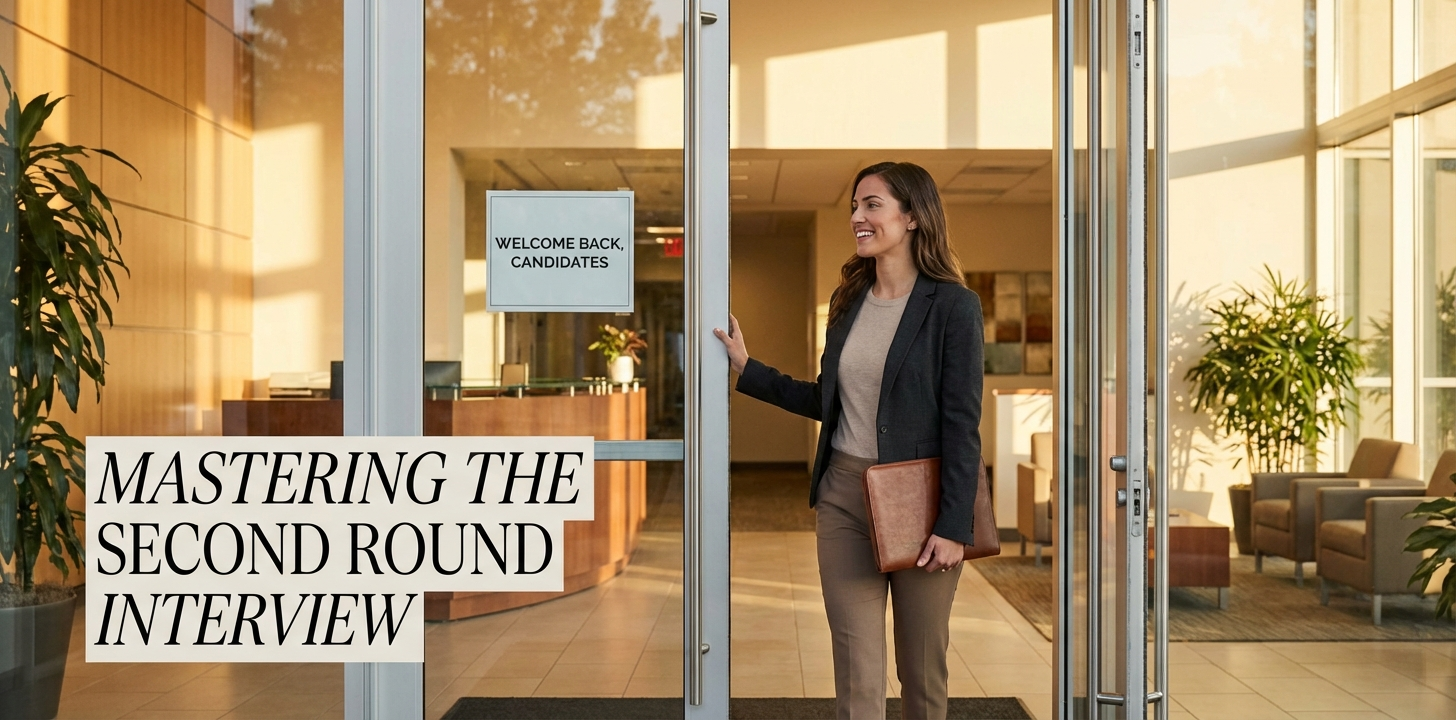
Getting to a second round interview means the first one went well. You cleared a bar. Now the bar is higher.
Second rounds are where companies get serious. The questions get harder, more people are involved, and the evaluation gets more specific. This isn't the time to assume you've got it - it's time to prepare even more carefully than you did for round one.
How Second Rounds Differ from First Rounds
First-round interviews are often about screening. Can this person do the job at a basic level? Are they who they say they are? Do they communicate clearly? These questions get answered early.
Want to practice what you just read?
Answer a real interview question and get AI feedback in a couple of minutes.
Second rounds assume you've passed those checks. Now they want to know: is this the right person for this specific role? Can they handle the harder stuff? Will they fit the culture? What will they be like to work with day-to-day?
A few patterns that show up in second rounds:
More people are involved. Where a first round might be one recruiter or one hiring manager, second rounds often involve multiple stakeholders - peers, skip-level managers, cross-functional partners.
The questions are more specific. Expect more probing on your actual experience, more follow-up, and more hypothetical scenarios related to the work itself.
Culture fit is a bigger focus. By the second round, they're fairly confident you can do the job. Now they're asking whether you'd be good to have around. Questions about how you like to work, your management style, your values, and how you handle setbacks come up more here.
There may be practical exercises. Case studies, technical assessments, presentations, or take-home projects often happen in round two. If they haven't given you a heads-up, ask your recruiter what format to expect.
What Didn't Get Covered in Round One
Go back through what you remember from the first interview. What did they seem most curious about? What questions ran out of time? What topics felt like they only scratched the surface?
Those are likely to come up again in round two - either because the hiring manager is bringing it back up or because a new interviewer wants to probe the same area from their angle.
Also think about what you feel like you didn't answer as well as you could have. You'll probably get another shot at similar questions. Have a sharper version ready.
How to Build on Your First Impression
You already made a good impression - that's how you got here. Round two isn't about starting over; it's about reinforcing and deepening what you showed before.
Reiterate your genuine interest. People forget that enthusiasm still matters in later rounds. You don't need to be effusive, but making it clear you're still excited about this role (and more excited, now that you know more) is a real positive signal. It's one of the things managers often mention when they decide between two similarly qualified candidates.
Reference what you learned in round one. If the first interviewer told you something interesting about the team or the challenge they're facing, bring it up. "In my first conversation, [name] mentioned that the team is working through X - I've been thinking about that since." This shows you were paying attention and you've been thinking about the role.
Go deeper on your stories. You might get follow-up questions on things you said in round one. That's normal and expected. Have more detail ready, not less.
Don't repeat yourself mechanically. If you're talking to different people in round two, they may not have seen your full first-round transcript. But they may have. Assume a middle ground - be consistent, not repetitive.
Harder Questions to Prepare For
Second-round interviews tend to go deeper. Here are the types of questions that show up more in round two:
"What exactly draws you to this company over others?" They're not asking this because they want flattery. They want to know if you've done real research and have real reasons. Vague answers ("I love your culture!") fall flat here.
"Where do you see yourself in three to five years?" This is a question about fit. Will this role actually serve where they want to go? Is there a future here for you, or will you leave in a year?
"What would you do in your first 90 days?" This is common for mid-senior roles. They want to see that you've thought practically about how you'd approach the job. Be specific, not generic.
"What questions do you still have about the role?" This is a test of engagement. Have real questions ready - about the team, the challenges, what success looks like in year one.
Harder behavioral questions. The easy ones got asked in round one. Now expect: "Tell me about a time you failed at something significant" or "Describe the most difficult feedback you've ever received."
Questions to Ask in the Second Round
The questions you ask in round two should be different from round one. You've already covered the basics. Now dig deeper.
Good second-round questions:
- "What are the biggest challenges the person in this role will face in the first six months?"
- "How does success get measured in this role, and how often is that evaluated?"
- "What would make you confident you made the right hire?"
- "What does the team fast-paced look like right now - where are the strengths, and where are the gaps?"
- "Is there anything from our conversation so far that gives you any hesitation about my fit for this role?" (This is a bold one, but it's also a way to surface and address any lingering doubts before the decision is made.)
Ask questions you genuinely want answered. Faking curiosity is obvious.
The Practical Stuff
Research the new interviewers. If you're meeting people you didn't meet in round one, look them up before the interview. What's their background? What do they focus on? This helps you anticipate their questions and connect more genuinely.
Revisit the job description. Reread it carefully the night before. Think about how each bullet point maps to your experience. Is there anything you haven't addressed yet that feels relevant?
Get a good night's sleep and don't over-prepare. There's a point of diminishing returns on prep. You want to be sharp and present, not exhausted and in your head.
Dress at the same level or slightly above round one. Unless they've told you the culture is more casual, don't assume you can be more relaxed in round two. If the first interview was video and this one is in person, find out what to expect.
Getting to a second round is a real signal that you're a strong candidate. Treat it with the same seriousness as round one, add depth where you can, and walk in confident that you've earned the seat.
Vidal Graupera
January 23, 2026