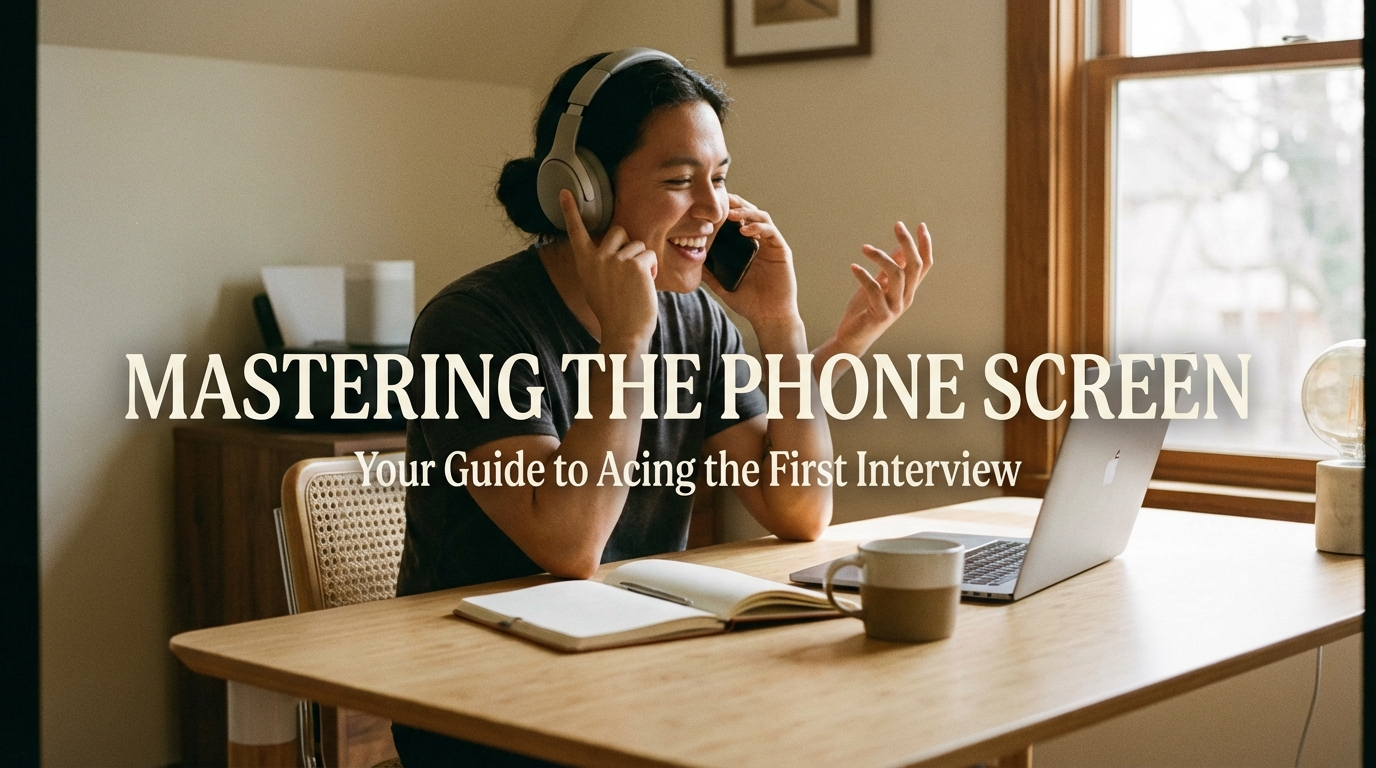
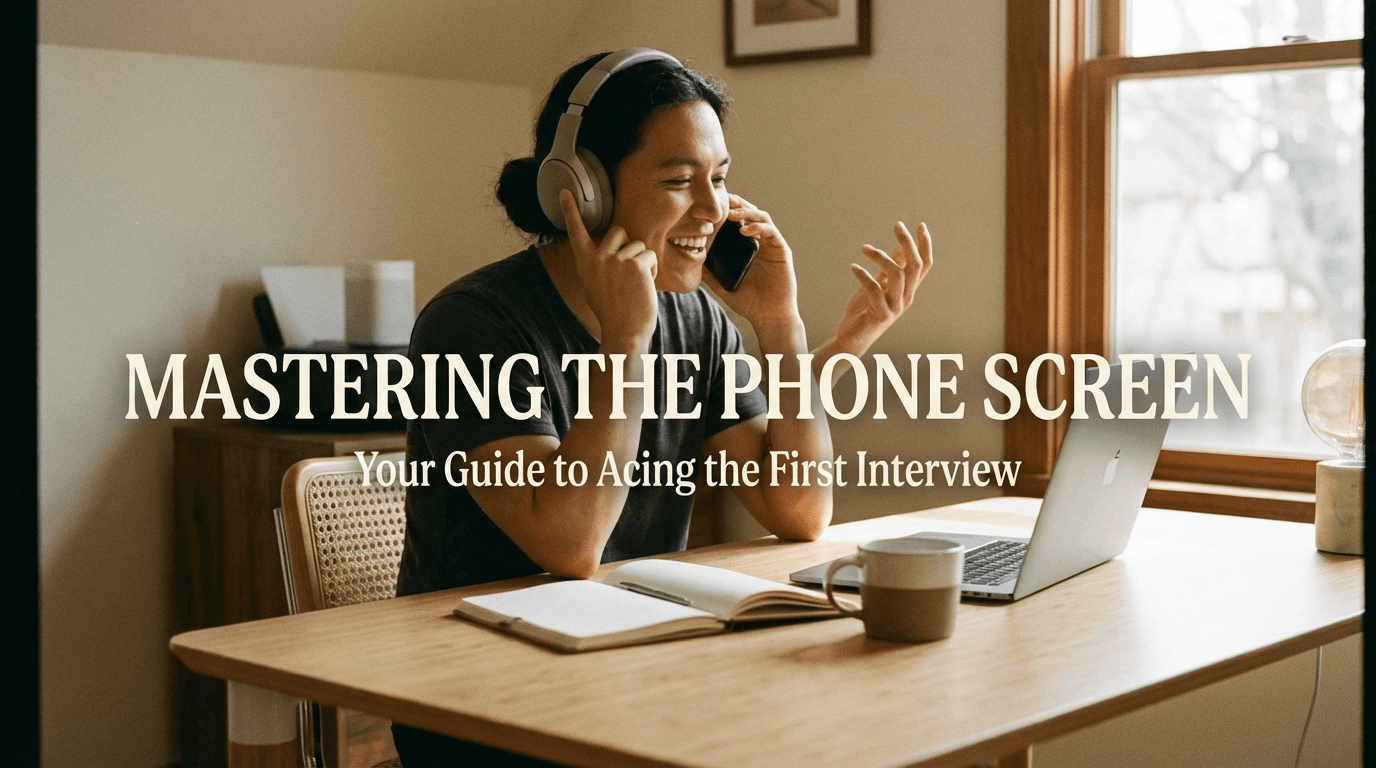
The phone screen is a qualifying round, not a formality. Companies use it to narrow down a large applicant pool to a smaller set of people worth investing more time in. That means it's also your chance to qualify them. Not every job is worth a full interview process.
Most people underprepare for phone screens. They treat them like a quick chat. That's a mistake - a bad phone screen eliminates you from jobs you might have been great at.
What Phone Screens Are Really For
From the recruiter or hiring manager's side, the phone screen is doing a few things:
Want to practice what you just read?
Answer a real interview question and get AI feedback in a couple of minutes.
Confirming the basics. Can you articulate what you do? Does your experience actually match what's in your resume? Are you coherent and easy to talk to?
Checking for obvious mismatches. Is your salary expectation in the right range? Are you actually available to start when they need someone? Do you have a work authorization situation they need to understand?
Getting a first impression. Are you enthusiastic? Do you seem interested in this specific role, or is it obvious you're mass-applying?
From your side, the phone screen should be doing the same things. You're figuring out whether the role, team, and company are worth spending more time on.
Questions They'll Almost Always Ask
"Tell me about yourself." This is where most phone screens start. Have a concise, relevant two-minute version of your background ready. Not your whole career history - just the relevant highlights and why you're interested in this type of role.
"Why are you interested in this role / company?" They want to know if you've done any research and if you have a genuine reason for applying. "I saw the job posting and thought it looked interesting" isn't enough. Know at least one specific thing about the company that actually appeals to you.
"What are you looking for in your next role?" Be honest here. If you want more autonomy, say that. If you want to move into management, say that. The goal is to see if what you want and what they offer actually overlap. It's better to figure out a mismatch at the phone screen stage than after three rounds.
"Can you walk me through your background?" This is a more open-ended version of "tell me about yourself." Hit the highlights of your career with emphasis on what's most relevant to the role.
"What's your current salary / salary expectations?" In many places, employers are required to share ranges first. But even if not, have a number in mind and don't lowball yourself. Research the market rate beforehand.
"What's your availability? When could you start?" Have a real answer ready. If you're giving notice at your current job, say how much notice you'd need to give.
Questions You Should Ask
The questions you ask in a phone screen signal how seriously you've thought about the role. Bad questions: "What does the company do?" (Google it.) Good questions: specific, thoughtful, and showing you've done homework.
Some questions worth asking:
- "What does success look like in this role in the first six months?"
- "What's driving the need to fill this position? Is it growth, a departure, a new initiative?"
- "What's the interview process from here? How many rounds, and what do they look like?"
- "What are the biggest challenges facing the team right now?"
- "What do you like about working there?" (if you're talking to the hiring manager, not a recruiter)
You probably won't have time for all of these. Pick two or three that feel most relevant given what they've told you.
How to Research the Company in 30 Minutes
You don't need a deep dive before a phone screen. But you need enough to sound engaged and ask a real question. Here's a 30-minute research sprint:
5 minutes: Website. Hit their About page, product pages, and any blog or news section. Get a sense of what they actually do and who their customers are.
5 minutes: LinkedIn. Look at the company page. How many employees? What's the growth trajectory? Have a look at the hiring manager's profile if you know who you're talking to.
5 minutes: Recent news. Google "[Company Name] news" or "[Company Name] 2025." Did they raise money? Launch something new? Win an award? Have a controversy? You want to know the recent context.
5 minutes: Reviews. A quick scan of Glassdoor or Blind gives you a sense of the culture, though be appropriately skeptical of review extremes.
5 minutes: Job description. Reread it carefully. What skills are they emphasizing? What does the role actually entail? Map your background to their stated priorities.
5 minutes: Think. Based on all of this, what's one genuine question you have? What one part of your background is most relevant to mention?
That's it. Thirty minutes is enough to walk into a phone screen sounding engaged and prepared without over-investing in an opportunity that may not go anywhere.
Practical Tips for the Call Itself
Use a quiet space. Not your car, not a coffee shop, not walking down the street. A quiet room where you can focus and not be overheard.
Have notes nearby. Unlike an in-person interview, you can have notes in front of you during a phone screen without anyone knowing. Write down two or three key points you want to mention and a couple of questions you want to ask.
Stand up or sit up straight. It sounds odd, but your posture affects your voice and your energy. People who stand or sit up during phone calls tend to sound more engaged.
Speak clearly and at a reasonable pace. Phone audio is imperfect. Slow down slightly and enunciate more than you normally would.
Don't interrupt. Let them finish before you respond. Overlapping dialogue is frustrating on both ends of a phone call.
Take notes. Write down what they say about the role, the team, and the timeline. You'll use this information for your follow-up research and future interview prep.
After the Phone Screen
Send a brief thank you email within 24 hours. It doesn't need to be long - just a note expressing continued interest and confirming anything you said you'd send (if you offered to provide references, your portfolio, etc.).
If they gave you a timeline for next steps and that time passes, one brief follow-up is appropriate. Keep it short and assume good faith - hiring timelines slip for lots of reasons that have nothing to do with you.
The phone screen is worth taking seriously. It's a short call, but it's the door to everything that comes after it.
Vidal Graupera
November 16, 2025